Friday, 31 March 2023

Day 3: Text Selection

This week we focused our learning on text selections. We practiced selecting suitable texts for 'pretend students' depending on their reading level, interests and most urgent next learning steps. We had discussions around how we group our students and if they are place in groups for ability and how often they may move groups. Ashley and I chose to create a reading group for students who needed to work on summarising as their learning intention.


This session we discussed on students recording themselves reading aloud, and I am thinking that this would be an important next step in my teaching and tasks for students to complete. Students hearing themselves reading aloud is important for improving their reading aloud and their pronunciation. This is part of our homework so I will work with Super Squad students and they can record themselves reading aloud.

Today I worked on a new task board for ANZAC Day next term and have tried a 'new and improved' layout that is more visual for students. I will trial this next term and see how this goes. This is as far as I have got below.


We had a look at the text coverage tab in the workbook and I started added the texts that I have used for each reading group already throughout the term. This is a great way to keep track of the types of texts that students have read so that they can be exposed to a variety of text types and genres. We do not actively ‘monitor our text types but we relate them to our big ideas, e.g sustainability, Te Tiriti, ANZAC Day, so this will help us keep a closer eye on what they have done.


Discussions around Finding the time to read with lower groups or individual students without them just reading with the teacher aide is a wondering of mind. This can be a challenge with everything we are trying to get done so it can be a challenge to read with those students with such limited time.


SUMMARISING

This afternoon, we looked at summarising and one thing that stood out to me was that even if a child can summarise at a lower level when they start reading more challenging texts they need to revisit summarising because the text itself is more challenging with broader concepts. I also noted that deleting the less important parts of a text to write a summary can be challenging for students and we need to be able to model this to them, do it together and then they can try summarise on their own.


Friday, 10 March 2023

Day 2 Reflection - Knowing your Learners at Readers

Today we explored our students PAT data with a fine tooth comb to identify where their next learning steps are in reading. We explored all the different ways you can view the students data individually or as year groups. We found that many students need to work on making local inferences when reading poems in particular. This makes me think about my own teaching, where poems are not a huge focus, so this is something that I will incorporate into my text sets in the future. 

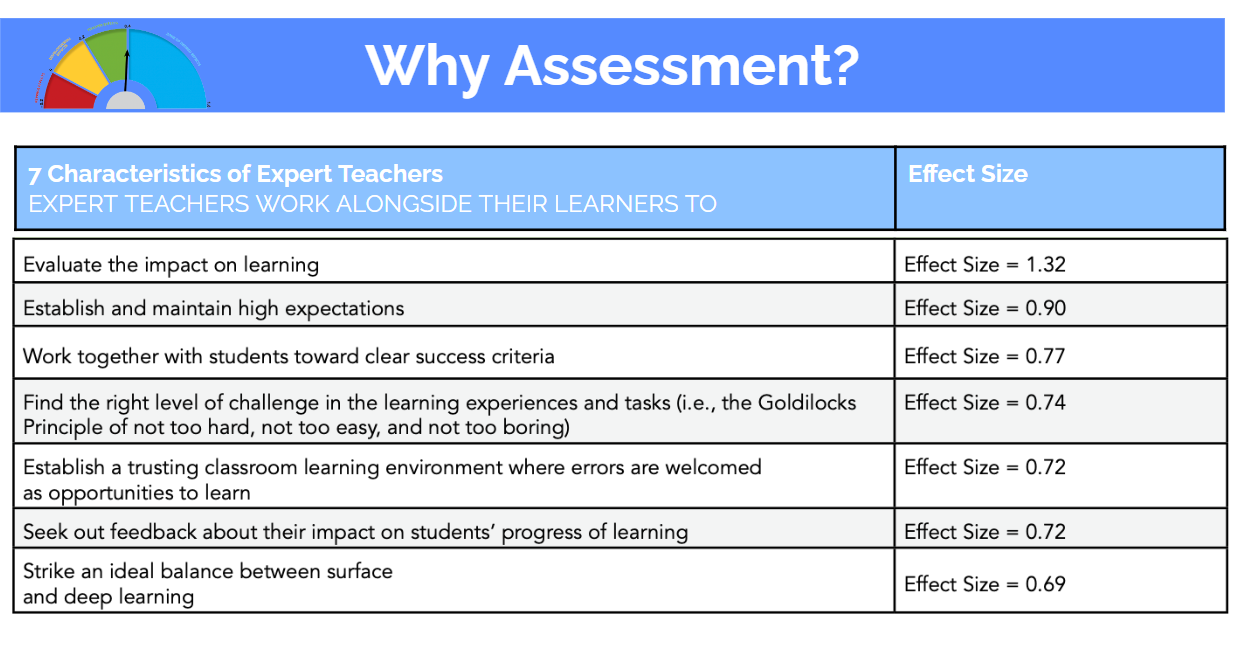
We looked at all the reasons why we asses, whether it be formative or summative assessment. Looking at the table below we can see the different effects and importance of why we assess. 

I really liked the teacher workbook, as it is one place where you can keep all of your reading data and information about your learners. I plan in a similar format but using Google Slides, so this could be a great adaptation to my reading planning and monitoring of students. It is all in one document which make it a lot easier to access and switch between reading groups and student information.

I thought giving the students a keyword to search for related texts on Epic was a great way for them to explore texts that are based on the topic, but still giving the students choice. I want to improve my taskboards by adding improved follow up activities and must do or can do activities related to the learning intention. 

Some really good examples of making inferences were shared with us, that allow students to have multiple opportunities to practice and meet their learning intention independently, after teacher instruction. Getting the students to explain their choice gets them thinking about why they have made their decision and forced them to think carefully. These a fairy simple activities that could be easily changed and adapted for my future teaching.

Reflecting on the reading survey data there are 3 students who identified that they did not really like reading. A large portion of the class like reading books in their own time with the exception of around 7. The library use was a bit more of a surprise as about half the class do not issue library books. 85% of the class are currently reading with the exception of 3 boys and 1 girl. Four students generally have low scores on the survey (2s). A lot of students like a wide range of books.  A lot of the books read by students are narratives. 

Building engagement with the students in reading is huge and after setting the rat traps in the Rerenga Awa, we read texts about it and one student showed increased engagement and was quite interested in this. Using more experiences to help students in reading - where they do not realise they are reading. 

Friday, 3 March 2023

Reading Practice Intensive - Reading is Core to Learning - Day 1

Today there were many new learnings and some recapping on good teacher practice. One of these was to know your students by having an understanding of what they are interested in and enjoy reading. Low achievement in reading is a social justice issue in Aotearoa and there is evidence that shows learners can make accelerated progress in writing after 3 years of learning at a Manaiakalani school. I want students to record themselves reading so they can hear themselves and then self assess to see where they have been successful and where they need to make changes.

What is the profile of a good reader?

We had to discuss what we thought made a good reader and the dispositions that these learners have.

  1. curious - ask questions before, during and after reading

  2. resilient - when they make mistakes they can find a way to fix them - bounce back

  3. problem solvers - decode

  4. critical thinkers - infer, find messages in the text

  5. make predictions

  6. make connections to what they already know and their experiences

  7. understand - comprehend what they are reading - need to read across texts

  8. read to learn

  9. participating - going to libraries

  10. enjoyment


What good readers do stated below.

Some key points:

Good readers actively make meaning

- Readers participate and need to have access to books

- Good readers read widely - Read to students with the latest books

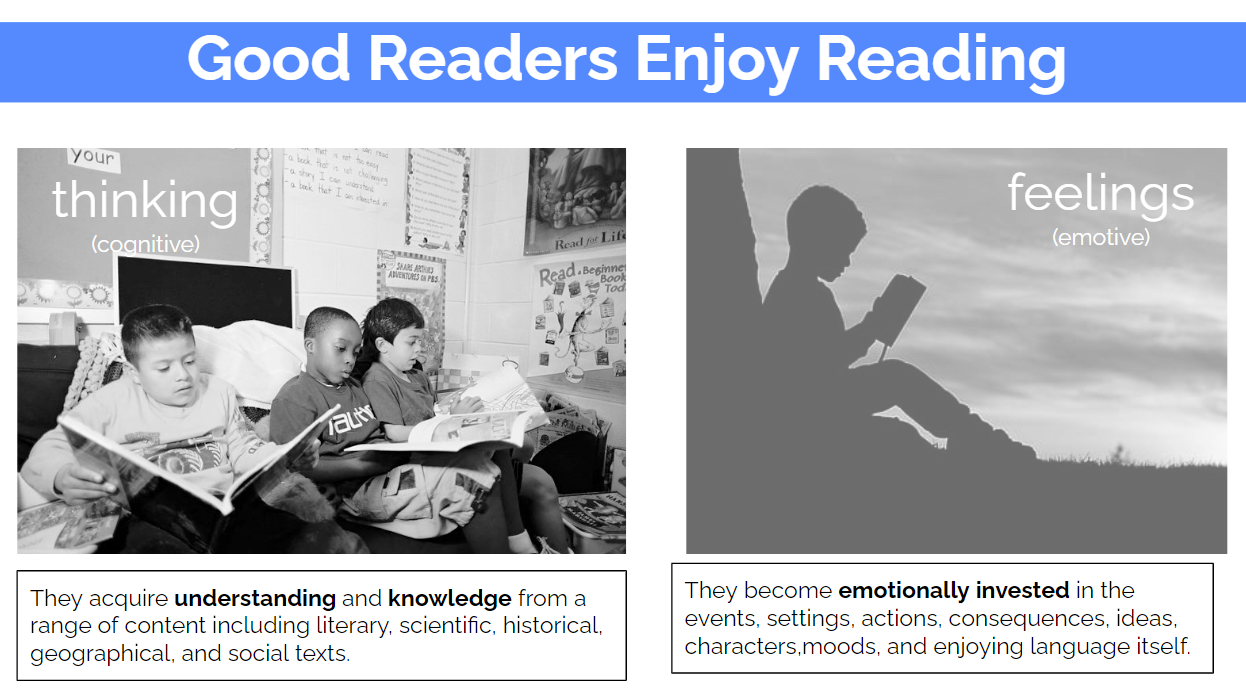
Good Readers Enjoy Reading This was interesting as I find that the texts I usually select for my students to read are often non-fictions texts where we 'think' about the text and do not necessarily discuss the feelings. This made me think that I need to include more fiction texts so that we can explore 'feelings' and emotive language.

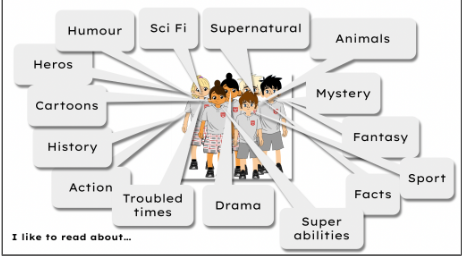
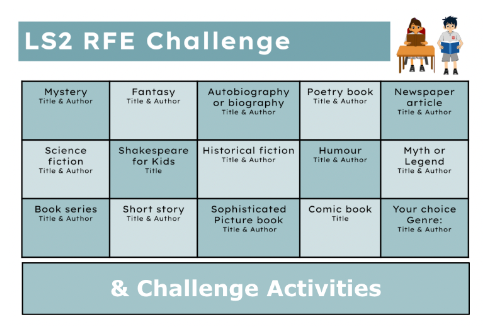
I added in image below because I want to find out what genre my students enjoy reading and if they're not sure or if they haven't read any of these genres, they can then explore them using the RFE challenge board (below).


Robyn Andersons reading challenge Panmure Bridge School (above)


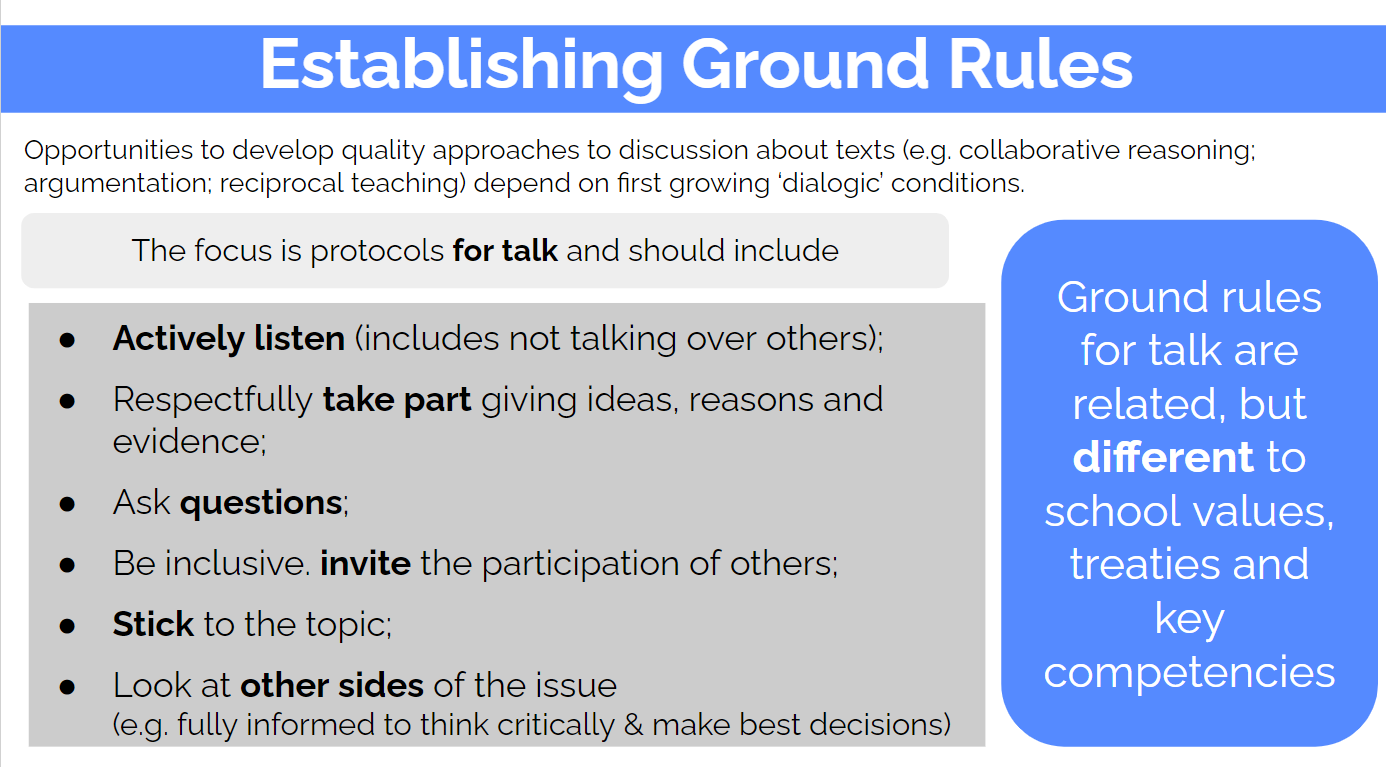
Over next week I will establish some clear ground rules during guided reading time. 

We want to build extended discussions where students are driving the discussion about the texts. 


Students monitor who is talking and can ask questions to their peers like, ‘what do you think Ashley?’ Students to monitor the protocols of talk, e.g active participation or inviting others to talk. We want to teach students to not fear to disagree and justify their opinions. It is important to look at the person who is talking and only have one person talking at a time.


Looking at Reading Data

Students like reading at school but less than 54% of the class were not currently reading a book. Many students do not go to the library to get books to read. Students are aware that reading helps them to learn. Most students do not have a public library card. Around 25% of students regularly read. Fiction, funny and sports related books are the most popular. Most students' favourite time to read is at school. I want to share my struggles with reading when I was younger with my students and help build a sense of identity in reading.


In the coming weeks it will be great to assess students success at using ground rules. Ashley and I were able to see where we were successful and where we needed to make changes, and quickly acted upon these changes after seeing our feedback. (See below).


Tuesday, 13 October 2020